Lecture
CAPeX Pioneer Lecture – Yang Shao-Horn
Challenges, opportunities and recent advances in fundamental understanding of processes and accelerated material discovery underpinning electrochemical energy storage and making of fuels/chemicals
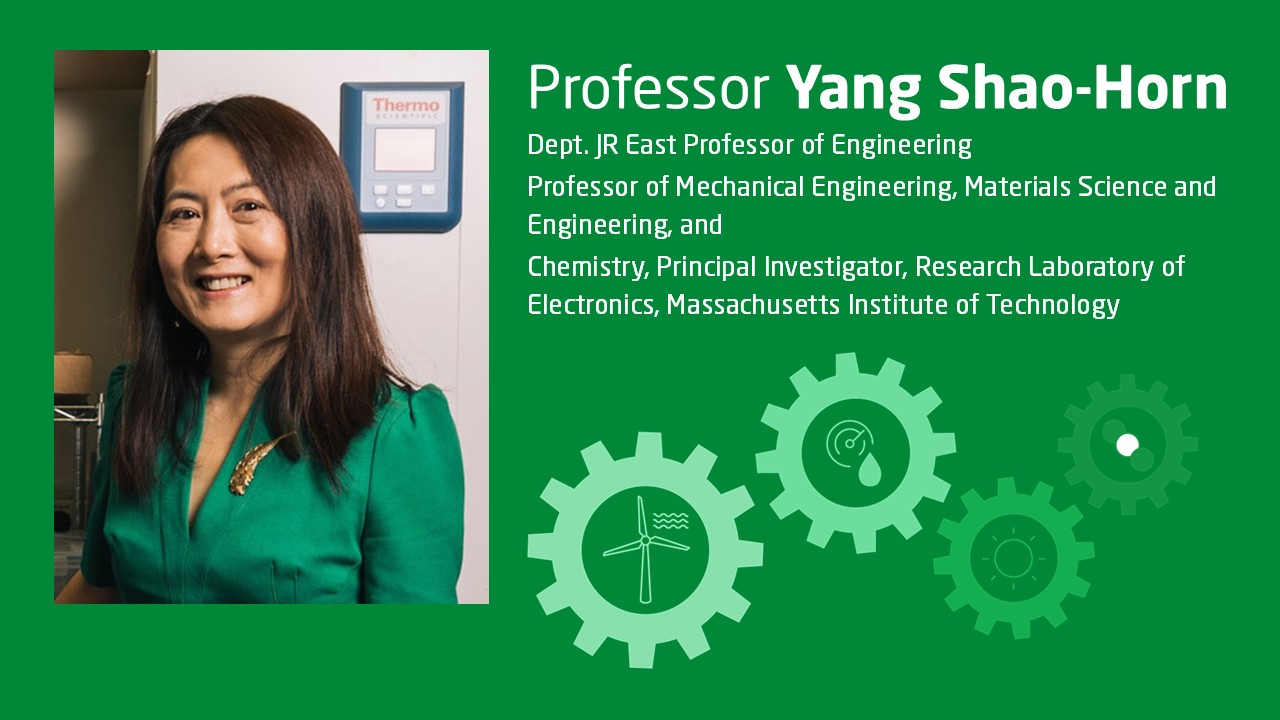
Professor Yang Shao-Horn will discuss challenges, opportunities and recent advances in fundamental understanding of processes and accelerated material discovery underpinning electrochemical energy storage and making of fuels/chemicals.
Professor Yang Shao-Horn is a member of the CAPeX International Advisory Board, and this lecture is part of the CAPeX Pioneer Lecture series focusing on recent progress in uncovering the fundamental processes that govern electrochemical energy storage and conversion, with an emphasis on reaction mechanisms at solid–liquid interfaces. Advances in operando characterization, simulations, and machine learning that enable deeper insight into catalytic pathways and the role of electronic structure in determining activity and stability. The series also highlights how data-driven approaches, high-throughput experimentation and Self-Driving Laboratories can accelerate the discovery of materials for Power2X. By integrating mechanistic understanding with computational and experimental tools, this work points to strategies for designing next-generation electrochemical systems that are both efficient and sustainable.
Yang Shao-Horn is Professor of Mechanical Engineering, Materials Science and Engineering and Chemistry at MIT. She is a Highly Cited Researcher in chemistry with 450+ publications in the topics of physical chemistry, electrochemistry, electrocatalysis energy, materials, batteries and fuel/electrolytic cells. She is a member of the National Academy of Engineering, and Fellow of the Electrochemical Society (ECS), the National Academy of Inventors and the International Society of Electrochemistry. Professor Shao-Horn has advised 150+ students and postdocs at MIT who are now pursuing successful careers in academia (50+) including faculty positions at MIT, Cornell and Yale, national labs and private sectors.